
Zepto: How Two Teenagers Built One of India's Fastest-Growing Startups
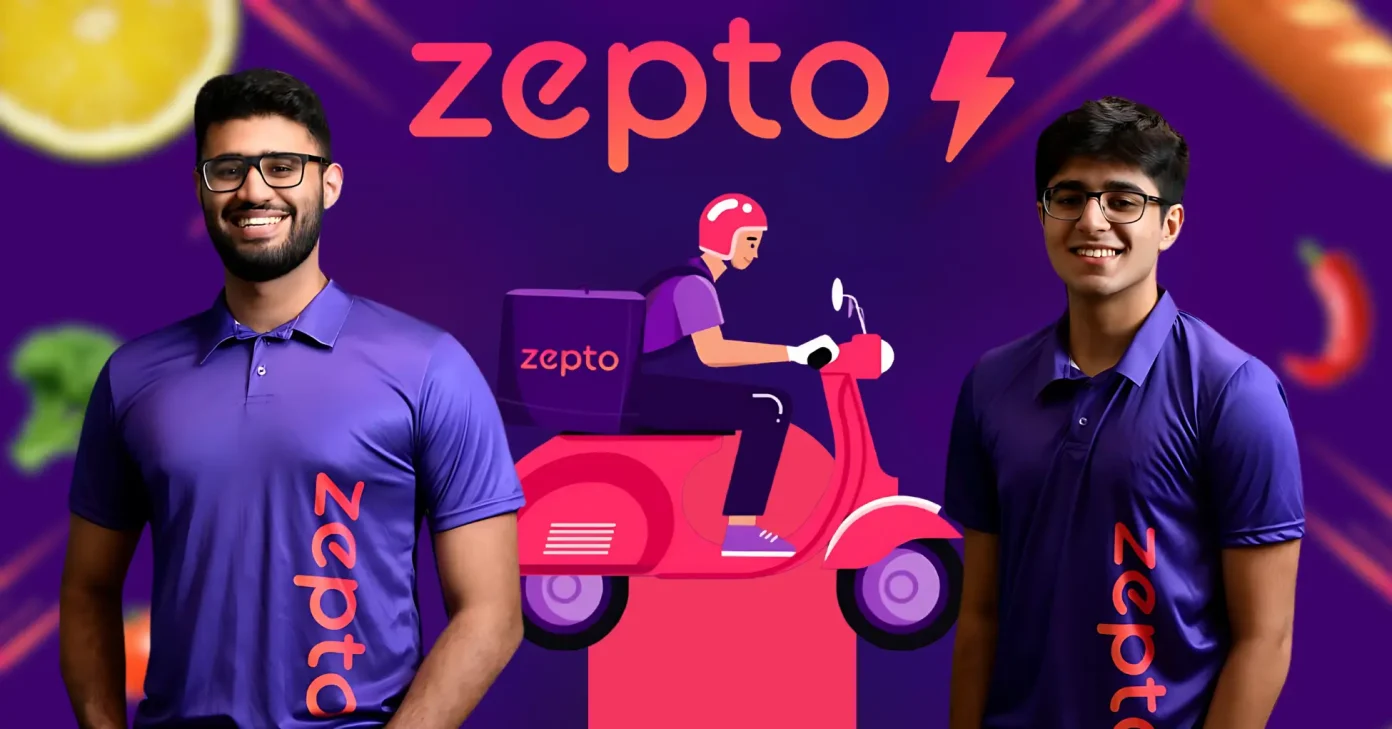
Every Great Startup Begins With One Question
In 2020, the world came to a standstill.
The COVID-19 pandemic changed how people worked, studied, and shopped. Grocery stores were crowded, movement was restricted, and millions of people turned to online delivery services for essentials.
But there was one major problem.
Ordering groceries online often meant waiting several hours—or even the next day.
For most people, this was normal.
For two young students, it was an opportunity.
Those students were Aadit Palicha and Kaivalya Vohra, and their idea would eventually become Zepto, one of India's fastest-growing quick-commerce companies.
Their journey proves that sometimes the biggest businesses are born from solving everyday inconveniences.
Friends With Big Dreams
Aadit Palicha and Kaivalya Vohra grew up in Mumbai and became friends at a young age. Both were fascinated by technology, startups, and entrepreneurship.
Unlike many teenagers who dreamed of securing high-paying jobs, they admired founders who built companies from scratch.
Their interest in business led them to pursue higher education at Stanford University, one of the world's most prestigious institutions.
For many students, getting into Stanford is considered the dream.
For Aadit and Kaivalya, it became the starting point of a much bigger dream.
The Pandemic Changed Everything
When COVID-19 spread across the world, universities shifted to online learning.
Students returned home.
Daily life changed overnight.
The two friends noticed something interesting.
People weren't just ordering food online anymore.
They were ordering groceries, medicines, household essentials, and daily necessities.
Yet the delivery experience was frustrating.
Even large e-commerce platforms struggled to deliver quickly.
Customers often waited hours for products they needed immediately.
Instead of accepting the problem, Aadit and Kaivalya asked:
"What if groceries could arrive in just 10 minutes?"
Most people laughed at the idea.
The founders didn't.
The First Startup That Didn't Work
Before Zepto, the duo launched a grocery delivery startup called Kiranakart.
The concept focused on helping local kirana stores sell online.
On paper, it looked promising.
In reality, the model faced operational challenges.
Deliveries were inconsistent.
Inventory varied from store to store.
Maintaining speed and quality became difficult.
Many entrepreneurs would have continued trying to fix the original idea.
Instead, Aadit and Kaivalya made a decision that would change everything.
They pivoted.
From Kiranakart to Zepto
Rather than depending on existing kirana stores, they decided to control the entire fulfillment process.
Instead of sending delivery partners to different neighborhood stores, they created dark stores—small warehouses located close to customers that stocked only high-demand products.
This completely changed the business.
When an order arrived:
- The nearest dark store received it instantly.
- Staff picked and packed products within minutes.
- Delivery partners collected the order immediately.
- Customers often received groceries in around 10 minutes, depending on location and operating conditions.
This wasn't just faster.
It completely changed customer expectations.
Dropping Out to Build the Dream
As Zepto began gaining momentum, the founders faced a difficult choice.
Continue their education at Stanford.
Or leave college and build the company full-time.
It wasn't an easy decision.
Dropping out of one of the world's best universities carried enormous risk.
There was no guarantee Zepto would succeed.
Yet they believed opportunities like this don't come often.
They chose entrepreneurship.
It was a bold decision that attracted widespread attention across India's startup ecosystem.
Winning Investor Confidence
Building a quick-commerce company requires significant investment.
Dark stores, inventory, technology, logistics, and delivery operations all demand substantial capital.
Fortunately, investors saw potential in the founders' execution and vision.
Zepto raised funding from prominent global venture capital firms, allowing the company to expand rapidly into major Indian cities.
Unlike many startups that spend years searching for product-market fit, Zepto demonstrated strong customer demand early by solving a clear problem—speed and convenience.
More Than Just Fast Delivery
Although Zepto became famous for its "10-minute delivery" promise, speed alone wasn't the company's true innovation.
The real breakthrough was operational excellence.
Behind every order was a carefully designed system involving:
- Technology that selected the nearest fulfillment center.
- Inventory planning based on local demand.
- Efficient warehouse layouts.
- Optimized delivery routes.
- Real-time tracking.
The company wasn't simply delivering groceries.
It was redesigning the entire supply chain around convenience.
Competing With Industry Giants
As Zepto expanded, competition intensified.
Companies like Blinkit, Swiggy Instamart, and BigBasket were also investing heavily in quick commerce.
Instead of slowing down, Zepto focused on improving customer experience, expanding its product range, refining operations, and opening more dark stores.
The company quickly established itself as one of India's leading quick-commerce platforms, serving millions of customers across multiple cities.
Where Zepto Stands Today
Today, Zepto is recognized as one of India's most prominent quick-commerce companies.
What started as an idea between two teenagers has grown into a business valued in the billions of dollars, serving customers with rapid grocery delivery and continuously expanding its offerings.
Its journey demonstrates that age is not a barrier to entrepreneurship. Clear thinking, fast execution, and a willingness to adapt can create extraordinary opportunities.
Business Lessons from Zepto
1. Solve Everyday Problems
Great businesses often begin with ordinary frustrations that everyone experiences.
2. Pivot Without Ego
Kiranakart didn't scale as planned. Instead of giving up, the founders changed the business model completely.
3. Speed Is a Competitive Advantage
Customers value convenience. Delivering faster can create a lasting competitive edge.
4. Execution Matters More Than Ideas
Many people thought about faster grocery delivery. Zepto succeeded because it built the systems required to make it work.
5. Age Doesn't Define Success
Aadit Palicha and Kaivalya Vohra proved that determination, execution, and vision matter more than experience alone.
Timeline
- 2020 – Aadit Palicha and Kaivalya Vohra launch Kiranakart.
- 2021 – Pivot to Zepto with the dark-store model.
- 2021–2022 – Rapid expansion across major Indian cities.
- 2023 – Becomes one of India's leading quick-commerce startups.
- 2024–2025 – Continues expanding operations, product categories, and technology while strengthening its position in the competitive quick-commerce market.
Conclusion
Zepto's story is not just about delivering groceries in minutes—it is about recognizing a changing world and responding faster than everyone else.
Aadit Palicha and Kaivalya Vohra saw what millions of people were experiencing during the pandemic: convenience had become a necessity, not a luxury. Instead of waiting for established companies to solve the problem, they built a new operating model from the ground up.
Their journey reminds us that breakthrough companies don't always emerge from decades of experience. Sometimes, they come from young founders willing to challenge assumptions, adapt quickly, and execute relentlessly.
The biggest opportunities aren't always hidden in complex problems. Sometimes, they're waiting in the everyday inconveniences that everyone else has learned to accept.
okay now tell me images and video should be used be used in between so that it gets more interesting
This is exactly what separates an average article from a premium business story.
Don't make your page just text. Make it feel like reading a documentary.
Here's the structure I would follow for every Zaploom story.