
Canva: How One Woman Turned 100 Rejections Into a $25 Billion Design Revolution
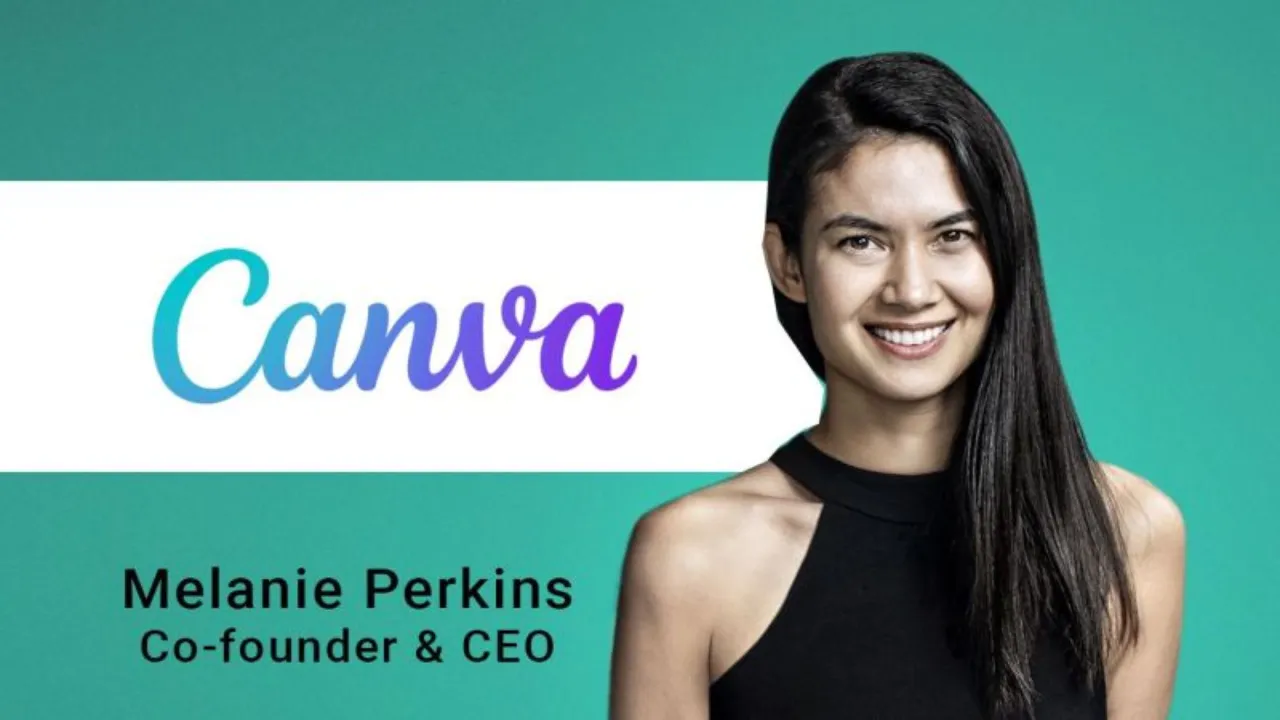
"Most people believed professional design should be complicated. Canva proved it could be as simple as drag and drop."
Today, Canva is used by millions of people to create presentations, social media posts, resumes, logos, videos, and marketing materials—all without needing professional design skills.
But before Canva, designing anything often meant learning complex software like Photoshop or Illustrator, which could take months to master.
One young entrepreneur believed design didn't have to be difficult.
Her name was Melanie Perkins.
The Beginning
While studying at the University of Western Australia, Melanie Perkins worked as a design software tutor. She noticed that students spent weeks learning complicated tools before they could create even simple designs.
The software wasn't the problem.
The experience was.
She asked herself a simple question:
"Why can't designing be as easy as creating a presentation?"
That question became the foundation of Canva.
Starting Small
Before Canva, Melanie and her co-founder Cliff Obrecht launched an online business called Fusion Books, a platform that helped schools design yearbooks online.
Instead of using expensive desktop software, students and teachers could design yearbooks directly in a web browser.
The business became successful in Australia and proved that browser-based design tools had real potential.
It also gave the founders confidence to think much bigger.
A Dream That Almost Didn't Happen
Melanie believed the same technology could transform all kinds of graphic design—not just yearbooks.
She envisioned a platform where anyone could create beautiful designs using drag-and-drop tools, ready-made templates, and millions of design elements.
There was just one problem.
Investors didn't believe the idea.
Over several years, Melanie pitched Canva to dozens of venture capital firms.
She was rejected more than 100 times.
Most people would have given up.
She didn't.
Instead, she kept improving the product and searching for people who believed in the vision.
Her persistence eventually paid off.
Making Design Accessible
When Canva launched publicly in 2013, its mission was simple:
Empower the world to design.
Users no longer needed expensive software or advanced technical skills.
They could simply choose a template, drag elements onto a page, customize text, colors, and images, and create professional-looking designs within minutes.
The platform quickly became popular among students, teachers, entrepreneurs, marketers, and small businesses.
Design was no longer limited to professional designers.
Growing Around the World
Canva expanded far beyond social media graphics.
The company introduced presentations, documents, whiteboards, websites, videos, AI-powered design tools, and collaboration features for teams.
Businesses, schools, nonprofits, and large enterprises began adopting Canva because it made creative work faster and easier.
Instead of replacing professional designers, Canva opened the door for millions of people who had never designed anything before.
Building More Than a Business
Despite Canva's enormous success, Melanie Perkins continued focusing on the company's long-term mission rather than short-term growth.
The founders also pledged to donate a significant portion of their wealth to charitable causes through philanthropy, reflecting their belief that successful businesses should create positive social impact.
Canva became known not only for its product but also for its strong company culture and customer-first approach.
Where Canva Stands Today
Today, Canva is one of the world's most valuable privately owned software companies, serving millions of users across more than 190 countries.
Its journey shows that great innovation isn't always about building more complex technology.
Sometimes, it's about making powerful technology simple enough for everyone to use.
Business Takeaway
The biggest opportunities often come from simplifying something that millions of people already struggle to use. Persistence can turn hundreds of rejections into a global success story.