Zerodha: How Two Brothers Changed the Way India Invests
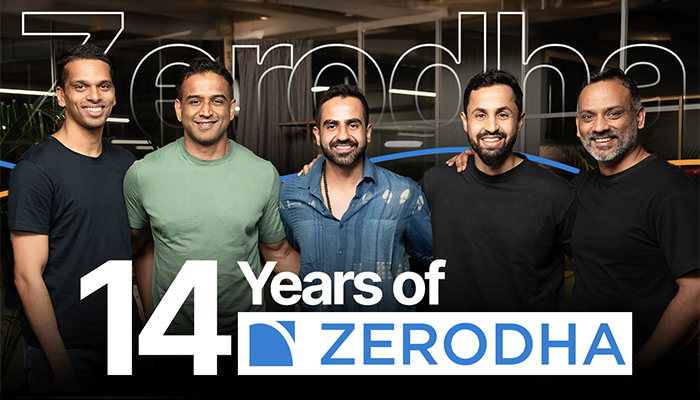
Every Revolution Begins With a Frustration
Today, opening a stock market account takes just a few minutes. With a smartphone, anyone can invest in stocks, mutual funds, ETFs, and government securities from anywhere in India. Millions of people trade daily using modern platforms, often paying little or no brokerage.
But things weren't always this simple.
Before 2010, investing in the Indian stock market was expensive, slow, and often confusing. Investors had to rely heavily on traditional brokers, paperwork was overwhelming, brokerage charges were high, and technology lagged behind customer expectations. The stock market was seen as a place for experienced traders and wealthy investors rather than ordinary people.
Two brothers believed this could change.
Their names were Nithin Kamath and Nikhil Kamath, and together they founded Zerodha, a company that would redefine India's brokerage industry without raising venture capital or spending heavily on advertising.
A Curious Boy Who Loved the Markets
Nithin Kamath was born in Shivamogga, Karnataka, and grew up in a middle-class family. His father worked as a bank manager, while his mother later became an entrepreneur. Conversations about money, savings, and financial discipline were common at home, planting the seeds of financial curiosity early in his life.
Unlike many successful entrepreneurs who dreamed of starting companies from childhood, Nithin was fascinated by something different—the stock market.
As a teenager, while many of his friends focused on sports or entertainment, Nithin spent hours studying stock prices, reading business newspapers, and trying to understand why markets moved the way they did.
At just 17 years old, he began trading.
Like many beginners, he imagined that making money in the stock market would be straightforward.
Reality proved otherwise.
Learning Through Failure
The market has a unique way of teaching lessons.
In his early trading years, Nithin experienced the excitement of profitable trades, the disappointment of sudden losses, and the emotional roller coaster that every trader eventually encounters.
Confident in his abilities, he even borrowed money to increase the size of his trades, hoping larger investments would generate larger returns.
Instead, the opposite happened.
The losses grew, leaving him in debt at a young age.
For many people, such an experience would have marked the end of their journey in the stock market. For Nithin, it became the most valuable education of his life.
He later reflected that those failures taught him lessons no classroom could ever provide—discipline, patience, risk management, and emotional control.
Those principles would eventually become the foundation of Zerodha's philosophy.
A Call Center by Day, a Trader by Night
To repay his debts and support himself financially, Nithin accepted a job at a call center in Bengaluru.
His daily routine was demanding.
He worked long shifts answering customer calls, but his passion for the markets never faded.
After work, he returned home to study charts, company reports, and trading strategies.
Weekends were dedicated to analyzing markets and improving his skills.
Rather than seeing his losses as failure, he treated them as tuition fees for learning one of the most challenging professions in the world.
Slowly, his approach changed.
Instead of chasing quick profits, he focused on preserving capital, managing risk, and making disciplined decisions.
Over time, his trading performance improved significantly.
Seeing the Industry From the Inside
As Nithin became a more consistent trader, friends and acquaintances began seeking his advice. Some even trusted him to manage their investments.
This experience introduced him to the brokerage industry from a completely different perspective.
He noticed the same complaints repeated by almost every investor.
Brokerage fees were high.
Pricing structures were complicated.
Opening an account involved endless paperwork.
Trading platforms lacked speed and simplicity.
Retail investors often felt overlooked while larger clients received priority.
To Nithin, these weren't isolated problems—they were signs of an industry that had failed to evolve with changing technology.
If online banking and e-commerce could simplify financial transactions, why couldn't stock investing become equally simple?
That question stayed with him.
The Brother Who Shared the Same Dream
While Nithin was gaining experience as a trader, his younger brother Nikhil Kamath was developing his own expertise in the markets.
Although their personalities were different, the brothers shared a deep passion for investing.
Nikhil possessed exceptional trading instincts, while Nithin focused more on understanding customers and building systems.
Together, they formed a powerful partnership.
One understood the psychology of trading.
The other understood the shortcomings of the brokerage business.
The more they discussed the industry, the clearer their vision became.
India didn't need another traditional broker.
It needed a completely different kind of brokerage.
An Idea That Challenged an Entire Industry
Before starting Zerodha, Nithin became a franchise partner of an existing brokerage firm.
The experience gave him valuable insight into how brokerage businesses operated behind the scenes.
He learned about regulations, customer onboarding, compliance, operations, and revenue models.
But he also realized something important.
The biggest expense for traditional brokers wasn't technology.
It was maintaining massive branch networks, complex sales teams, and outdated business models.
Those costs were ultimately passed on to customers through higher brokerage charges.
Nithin believed there was a better approach.
Instead of investing in hundreds of physical offices, why not build powerful online technology?
Instead of charging percentage-based brokerage, why not charge a simple flat fee?
Instead of relying on aggressive salespeople, why not let satisfied customers recommend the platform?
These ideas seemed unconventional in 2010.
Today, they are considered industry standards.
The Birth of Zerodha
On 15 August 2010, Nithin and Nikhil officially launched Zerodha.
The name combined the English word "Zero" with the Sanskrit word "Rodha," meaning barrier.
Their mission was simple yet ambitious:
Remove every barrier that prevented ordinary Indians from participating in the stock market.
Unlike many startups, Zerodha didn't begin with venture capital funding, celebrity endorsements, or expensive advertising campaigns.
The founders invested their own money.
Every decision was made carefully.
Every rupee mattered.
Most importantly, they were solving a problem they had personally experienced.
That authenticity became one of Zerodha's greatest strengths.
The journey had begun—but convincing India to trust a new kind of brokerage would prove to be their biggest challenge.
Disrupting an Industry, One Trade at a Time
“Zerodha didn't become India's largest stockbroker by spending the most money. It became the largest by solving the biggest problems.”
Launching Against Industry Giants
When Zerodha launched on 15 August 2010, the Indian brokerage industry was already crowded. Established firms like ICICI Direct, HDFC Securities, Sharekhan, Motilal Oswal, and Angel Broking had been operating for years. They had thousands of employees, physical branches across the country, and strong brand recognition.
In comparison, Zerodha was a tiny startup run by two brothers with no venture capital, no large marketing budget, and no famous investors backing them.
Many believed the company wouldn't survive.
But Nithin and Nikhil weren't trying to outspend the competition—they wanted to outthink them.
The ₹20 Revolution
At the time, most brokers charged customers a percentage of every trade. The more you traded, the more brokerage you paid. Active traders often spent thousands of rupees every month just on brokerage fees.
Zerodha introduced a simple alternative:
A flat brokerage of ₹20 per executed order, regardless of the trade size.
Whether someone traded ₹10,000 or ₹10 lakh, the brokerage remained the same.
Even more revolutionary, equity delivery investments eventually became completely free, encouraging long-term investing instead of frequent trading.
For many investors, it was the first time they felt the brokerage industry was working in their favor.
The pricing model challenged decades of industry practice and forced competitors to rethink their own business models.
Technology Before Marketing
Instead of opening hundreds of branches or spending heavily on television advertisements, Zerodha invested almost everything into technology.
The founders believed a better product would naturally attract customers.
This philosophy led to the creation of Kite, a modern trading platform designed to be fast, lightweight, and easy to use.
Unlike many older trading terminals that felt complicated and outdated, Kite offered a clean interface, powerful charts, real-time market data, and smooth performance across desktop and mobile devices.
As technology improved, traders began recommending Zerodha to friends, family, and colleagues.
The company grew largely through word of mouth, proving that an exceptional product could become its own marketing engine.
Building an Ecosystem, Not Just a Brokerage
Nithin believed that helping people invest wasn't enough—they also needed education.
This led to the launch of Varsity, one of India's most comprehensive free platforms for learning about the stock market.
Varsity explained everything from the basics of investing to technical analysis, options trading, futures, risk management, and fundamental analysis in a simple, beginner-friendly way.
Instead of hiding knowledge behind expensive courses, Zerodha made it available to everyone at no cost.
The company also introduced products like:
- Coin – A platform that allowed investors to buy direct mutual funds without distributor commissions.
- Console – A detailed dashboard for portfolio analysis and tax reports.
- Rainmatter – A fintech initiative that invests in and supports startups working in financial technology, sustainability, and investor education.
These products transformed Zerodha from a brokerage firm into a complete investment ecosystem.
Growing Without Venture Capital
One of Zerodha's most remarkable achievements wasn't its technology—it was its business model.
Unlike many startups that raised millions of dollars from investors, Zerodha chose a different path.
The company remained bootstrapped.
Every expansion was funded through its own profits.
This gave the founders complete control over their decisions.
They didn't have to chase rapid growth at any cost or prioritize investor expectations over customer needs.
Instead, they focused on sustainable growth, profitability, and long-term value.
As the customer base expanded, the business became increasingly profitable without sacrificing its principles.
A Turning Point During the Digital Investing Boom
The COVID-19 pandemic changed investing in India.
With more people staying at home, interest in personal finance and stock markets surged. Millions of first-time investors opened trading accounts, and Zerodha's simple pricing, user-friendly platform, and educational resources made it a natural choice.
Customer numbers grew rapidly.
The company soon became India's largest retail stockbroker, serving millions of investors across the country.
What started as a small startup challenging expensive brokerage fees had evolved into the market leader.
Leading Without Chasing Headlines
Despite building one of India's most valuable financial businesses, Nithin Kamath maintained a relatively low profile.
He frequently shared insights about entrepreneurship, health, investing, and business on social media, emphasizing sustainable growth over vanity metrics.
The company continued improving its products instead of chasing publicity.
This philosophy reflected Zerodha's culture:
- Build useful products.
- Keep pricing transparent.
- Educate customers.
- Stay profitable.
- Think long term.
Where Zerodha Stands Today
Today, Zerodha serves millions of customers and is widely recognized as India's largest stockbroker by active clients. It has played a significant role in making investing more accessible and affordable for everyday Indians.
The company has shown that a startup doesn't need massive funding rounds or aggressive advertising to build an industry-leading business. By solving real customer problems, focusing on technology, and maintaining financial discipline, Zerodha created a lasting impact on India's financial ecosystem.
Business Lessons from Zerodha
1. Solve a Real Problem
Zerodha succeeded because it addressed genuine customer frustrations—high brokerage costs, outdated technology, and unnecessary complexity.
2. Build Products People Recommend
Great products reduce the need for expensive marketing. Satisfied customers become your strongest advocates.
3. Stay Profitable
Growth funded by profits can provide more freedom and stability than growth dependent on constant fundraising.
4. Educate Your Customers
Helping customers succeed builds trust. Platforms like Varsity strengthened Zerodha's relationship with its users.
5. Think Long Term
Rather than chasing quick wins, Zerodha focused on creating sustainable value. That patience became one of its greatest competitive advantages.
Zerodha Timeline
- Late 1990s: Nithin Kamath begins trading.
- Early 2000s: Experiences significant trading losses and works at a call center while continuing to learn.
- 2010: Zerodha is founded by Nithin and Nikhil Kamath.
- 2013–2015: Introduces modern trading platforms and expands its customer base.
- 2015: Launches Varsity for free investor education.
- 2017: Introduces Coin for direct mutual fund investments.
- 2019: Launches Rainmatter to support fintech innovation.
- 2020–2022: Rapid customer growth during India's investing boom.
- Today: India's largest retail stockbroker, serving millions of investors.
Conclusion
Zerodha's story is not just about building a successful brokerage—it's about challenging an entire industry with simplicity, transparency, and customer-first thinking.
Nithin and Nikhil Kamath didn't begin with extraordinary resources. They began with firsthand experience of the problems traders faced and the determination to solve them. By focusing on trust instead of hype and innovation instead of imitation, they transformed how millions of Indians invest.
Their journey reminds us that the most disruptive businesses often start with a simple question:
"Why does this have to be so complicated?"
When someone dares to answer that question differently, industries change—and sometimes, an entire generation benefits.